

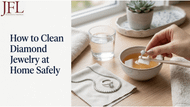
How to Clean Diamond Jewelry at Home Safely
Posted by pinecone media on Sep 4th 2026
Diamonds go dull long before anyone works out why. Lotion, hairspray, and skin oil build a thin film across the bottom of the stone, and light stops bouncing back through it. Learning to clean diamond jewelry at home fixes most of that in about fifteen minutes, using supplies already in your bathroom.
Based in Atlanta, Georgia, Jewelry 4 Less Atlanta sells diamond rings, pendants, earrings, and watches, along with financing and in-house repair. Our team also handles cleaning and inspection for customers who prefer to leave it to a bench jeweler.
What Supplies Work Best for Cleaning Diamonds
The safest solution is the simplest one. Warm water and a small amount of dish soap lift oil without touching metal or stone. Skip anything labeled heavy-duty or degreasing, since strong surfactants and added brighteners can dull certain finishes over repeated use.
What to Have Ready before Starting
A small bowl of warm water, mild liquid dish soap, and a soft baby toothbrush cover everything needed. Keep a lint-free cloth nearby for drying, and lay a towel across the sink drain first. That last step has saved more rings than any cleaning product ever has.
How to Clean Diamond Jewelry at Home Step by Step
The routine has two real stages, soaking and brushing, and neither one should be rushed. Pieces with many small stones, including pavé bands and Diamond Heart Jewelry, hold more residue in the tight gaps between settings, so they usually need a longer soak than a plain solitaire.
How Soaking Loosens Everyday Buildup
Mix a few drops of soap into lukewarm water and let the piece rest for twenty to forty minutes. Warm is the word to hold onto, not hot, because sudden temperature swings stress glued settings and can loosen older prong work over time.
How Brushing Reaches Behind the Setting
Most of the grime hides underneath the stone, where the pavilion meets the mounting. Brush gently from below with a soft toothbrush, circling each prong as you go. Rinse in warm water, then dry with a lint-free cloth instead of a paper towel, which leaves fibers behind.
What Products Damage Diamonds and Settings
Many household staples quietly ruin jewelry. Chlorine attacks the alloys in gold, which is why rings should come off before pools and hot tubs. Abrasive powders scratch metal even when the diamond survives intact, and the damage shows up as a cloudy, worn band.
What to Keep Away from Diamond Settings
Bleach, toothpaste, and baking soda all cause harm that cannot be polished out easily. Acetone and rubbing alcohol can damage treated stones, and ultrasonic machines can worsen an existing fracture or a clarity-enhanced diamond, turning a small flaw into a real problem.
How Often Diamond Pieces Need Cleaning
Daily-wear pieces do best with a quick soak every two weeks. Earrings and pendants meet less lotion and soap, so once a month is plenty. Anything worn during cooking, gardening, or workouts benefits from a same-day rinse under warm water.
When Professional Cleaning Makes More Sense
Home cleaning handles film, not structural problems. A jeweler checks prong tension, tightens loose stones, and can steam clean safely once the setting is confirmed sound. Twice-yearly inspections at Jewelry 4 Less Atlanta catch small issues well before a diamond has a chance to fall out.
Conclusion
Regular care keeps stones bright without any risk. Warm, soapy water, a soft brush, and patience are enough to clean diamond jewelry at home, while harsh chemicals and abrasives cause lasting damage. For loose settings or deep cleaning, the bench jewelers at Jewelry 4 Less Atlanta can help.